What separates winning teams from losing ones? It’s not always talent. Indiana University’s stunning 2026 College Football National Championship proved that team culture beats talent every time. Here’s what business leaders, coaches, and parents can learn from one of sports’ greatest upsets.
Why Do We Focus So Much On Culture?
Are you a parent? Perhaps you are the owner of your own business or the leader of a major corporation. Do you want your family or your business to be the very best? Assuming your answer is yes, here are a few more questions that can clarify your own direction as you choose what kind of leader you will be.
Have you ever wondered how a tiny Appalachian State football team can go into The Big House in Ann Arbor and beat Michigan? Or how Georgia STATE might possibly go into Neyland Stadium and beat Tennessee in front of 109,000 of their own fans? How does Boise State ever beat Oklahoma in the Fiesta Bowl? But they did.
How Indiana Proved Culture Beats Talent
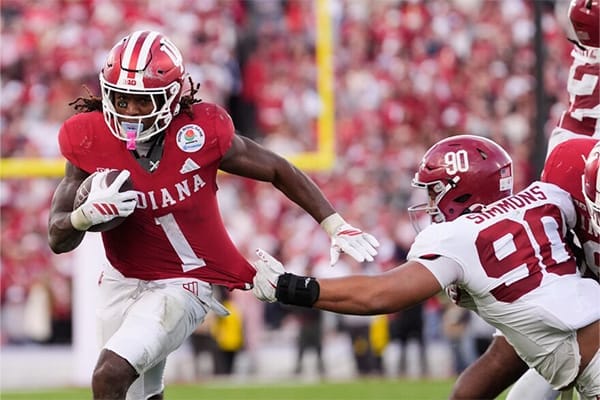 Then, consider this year’s Rose Bowl. The game made no sense on paper. On paper, Alabama should have destroyed Indiana. Of course, that’s why they don’t play ’em on paper. On the field, Indiana’s Hoosiers defeated Alabama’s Crimson Tide 38-3 despite a staggering imbalance in raw talent.
For example, Indiana dressed only eight players for the game who were rated as 4-star recruits. They had no 5-star players at all. But Alabama trotted out fifty-seven guys who were 4 and 5-star players. Then Indiana destroyed Oregon and their fifty-one 4 and 5-star players. And finally Indiana earned The National Championship by beating the University of Miami. Miami has forty-three 4 and 5-star players.
In fact, it is also interesting to note that Miami’s quarterback was paid 4 million dollars to play this year. Meanwhile the Indiana quarterback was a 2-star player. Guess which guy won the Heisman?
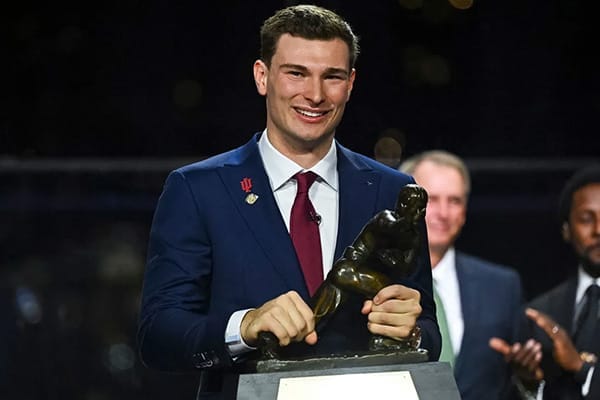
If recruiting rankings decided outcomes, the result would have been inevitable. Think about it: the top 5 college football teams in recruiting last year were, in order, USC, Alabama, Ohio State, Georgia, and Texas. Two of those teams—USC and Texas—didn’t even make the playoffs and the other three—Alabama, Ohio State, and Georgia—were eliminated early.
That alone tells us something uncomfortable, but absolutely essential for those of us growing teams for the field or office: talent accumulation does not equal performance. Culture determines whether talent multiplies or cancels itself out.
Indiana didn’t win the National Championship because they were faster, bigger, or more gifted individually. They weren’t. Indiana won because their culture demanded alignment within their team structure. Every player understood his role, trusted the system, and executed with discipline. Effort wasn’t situational; it was expected. Communication wasn’t optional; it was habitual. Accountability didn’t wait for mistakes; accountability was baked into their preparation for every practice and every game.
Moreover, the fact that accountability was a constant during their off-time when the players were just living their lives made all the difference. Every time adversity showed up—and it always does on a big stage—Indiana responded as a unit, not a collection of individuals.
However, Alabama and Oregon, by contrast, looked like a roster rich in potential but fractured in communication and execution. Talent without cohesion creates hesitation. Hesitation is death to decision making and communication. And whether on the field or in the office, hesitation gets exposed.
The Difference Between Training and Coaching
This explains why the Alabama program has fallen off a cliff the past two years with the departure of Nick Saban.
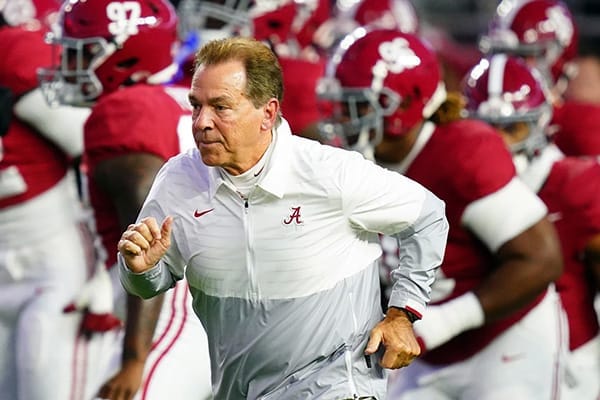 Nick was a COACH. He understood that the talent was there and that the players had been TRAINED all their lives. He knew he had to coach them through a process that would yield the proper team culture.
Most industries (including college football) watch their competition in order to determine how they are doing. Is the economy good? Profits up? Yeah, us, too. We’ll just keep doing what we’re doing. Is the economy tanking? Profits down? Yeah, us, too. Let’s just be careful and keep doing what we’re doing.
Nick Saban won 7 National Championships. Was Saban executing a conscious departure from his own industry? Was he coaching differently? Was he explaining something different to his players and coaches?
Curt Cignetti, the Head Coach at Indiana, answered that question with a YES in a statement just last week when he said, “I felt after a single season with Coach Saban, I had learned more about how to run a program than I did the previous 27 years as an assistant coach in other programs.” And there must be something to the fact that the head coaches of the final four teams in the playoffs coached as assistants under Saban.

It’s the critical lesson for any organization chasing extraordinary results: Culture is the force that converts ability into outcomes. You can recruit the best people, fund the best tools, and stack credentials as high as you like—but without a culture that reinforces standards, belief, communication, and shared responsibility, the gap between what could happen and what does happen grows wider every day.
Ultimately, Indiana didn’t just win a National Championship on the scoreboard; they demonstrated that when a culture is strong, it levels every advantage talent claims to have. And when culture is weak, even overwhelming talent becomes irrelevant.
What This Means for Your Team
In closing, here are two things for us to remember in our coaching journeys:
1) Outcomes can be a distraction. Focus instead on the process of what you have to do to obtain the outcome. Nick Saban said that.
2) Nothing ruins a great employee like tolerating a bad one. You can’t do epic things with sub-par people. Note that I did not say sub-par talent—I said sub-par people.
If you are leading a family, you must compete with the players you have. Lead them into a proper culture and you will raise happy, productive adults.
If you own a business, consider yourself to be running an NFL Team. Even if you won the Super Bowl last year, you still need to upgrade your team. How do you create a better team with the players you currently have? To see if there might be an answer to that question for you, check out this 2 minute video…
Learn More About Creating Measurable Results Here